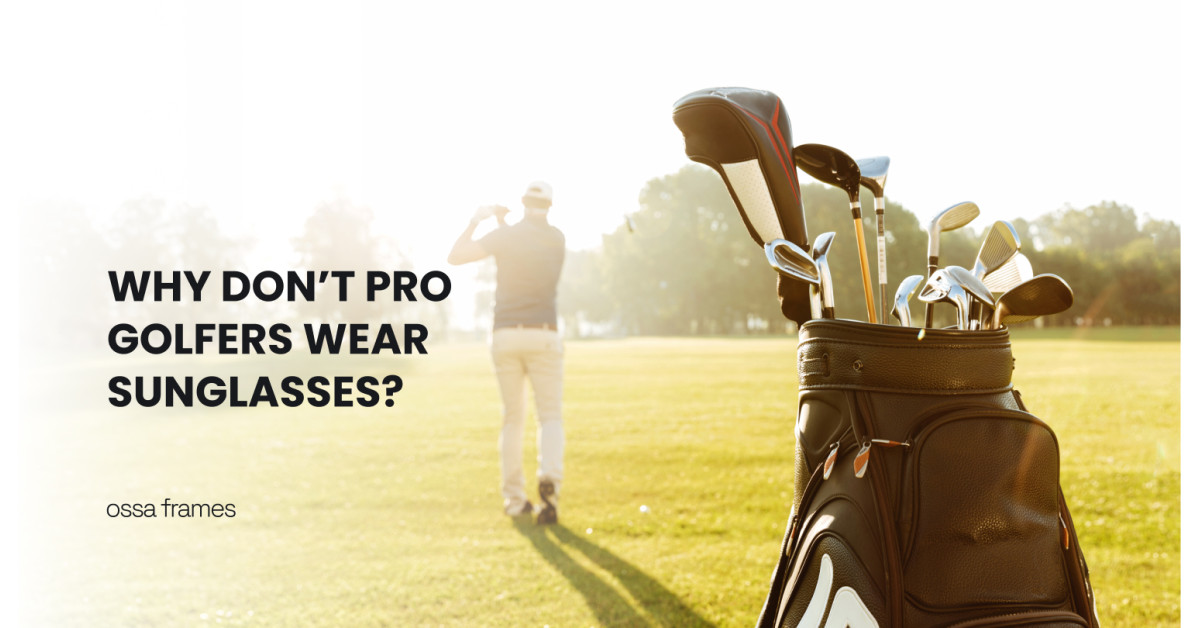
When you think of sports professionals, they’re often decked out in the latest gear designed to optimize performance. But, in professional golf, one accessory is noticeably absent: sunglasses.
So, why don’t golfers wear sunglasses? Or, more specifically, why don’t pro golfers wear sunglasses?
In this blog, we’ll answer those questions (and more!), exploring the science behind sunglasses and sports performance, and uncovering what experts and pros have to say. Plus, we’ll recommend eyewear that can give recreational players the perfect balance of style, comfort, and performance.
Let’s get into it.
The Debate Around Golfers and Sunglasses
At first glance, it seems logical for golfers to wear sunglasses; they spend hours outdoors under bright sunlight and often golf on courses with little to no shade. Yet, many pro golfers forgo sunglasses anyway, a decision that’s sparked curiosity and debate among viewers and fans.
Ultimately, there are two main reasons pro golfers have cited for not wearing sunglasses, the first being tradition.
Golf is deeply rooted in tradition, and sunglasses have historically been considered a distraction. Until recently, they were bulky and prone to slipping — two factors that can interfere with a golfer’s focus.
Perceived vision impairment is another reason pro golfers don’t wear sunglasses.
Many pro golfers believe sunglasses affect their ability to read greens accurately, impacting their precision, clarity, and depth perception. Others have said sunglasses detract from their connection to the game and natural environment, too.
The Impact of Sunglasses on Visual Performance
The main argument from pro golfers who don’t wear sunglasses is their potential impact on visual performance. Golfers rely on acute vision for tasks like tracking the ball in flight, judging distances, and reading greens.
These activities require clear peripheral vision, accurate depth perception, and adaptability to changing light conditions, which some sunglasses can inadvertently hinder by:
● Distorting Color: Certain tinted lenses can alter color perception, which may make it harder to differentiate shades of green on the course.
● Reducing Depth Perception: In some cases, polarized lenses can affect depth perception, a vital visual capability for shot precision.
● Limiting Field of Vision: Bulky frames can limit peripheral vision, making it harder to spot subtle cues in the golfer’s surroundings.
That being said, modern eyewear advancements have addressed many of these issues, with high-quality, golf-specific sunglasses that offer enhanced clarity and performance now available.
Professional Opinions and Guidelines
While many professional golfers opt to play without sunglasses, not every pro has the same opinion. Some of the most prominent players have embraced sunglasses, even going as far as to make them part of their signature look. For example, Danielle Kang and Phil Mickelson are known for wearing sunglasses during golf tournaments.
However, coaches and eye specialists often recommend that golfers of all skill levels wear sunglasses because long-term UV exposure can lead to serious, highly damaging eye conditions. Professionals who play without sunglasses typically balance this risk by using hats, visors, or specialized contact lenses designed to reduce UV exposure.
Protecting your eye health should always be a top priority, but ultimately, the decision for pro golfers to wear sunglasses comes down to personal preference, comfort, and specific needs.
Recommendations for Golf-Friendly Eyewear
If you’re wondering how to protect your eyes while you golf — without sacrificing performance — we’ve got good news. Plenty of modern eyewear options cater to the unique needs of golfers without impeding any visual capabilities. Here’s what to look for when choosing golf-friendly sunglasses:
1. UV Protection
The most important feature is 100% UV protection. This shields your eyes from harmful rays that cause long-term damage and/or eye issues.
2. Contrast-Enhancing Lenses
Lenses designed for golfers often enhance contrast, making reading greens and tracking the ball easier. Amber, copper, or brown tints are best for this!
3. Lightweight and Secure Frames
Choose lightweight, snug-fitting frames – like wraparound frames – to ensure they stay in place during your swing. This also helps maintain peripheral vision.
4. Anti-Reflective Coatings
An anti-reflective coating minimizes glare without over-darkening your view. This is especially helpful on sunny days or courses with water hazards.
5. Polarized vs. Non-Polarized Lenses
Polarized lenses reduce glare, but if you feel they affect your depth perception, try out non-polarized lenses with other glare-reducing technologies.
Top Picks for Golf Sunglasses
For golfers looking to invest in high-quality eyewear, consider sunglasses from these trusted (and golf-friendly) brands.
● Oakley Prizm Golf Sunglasses: Specifically engineered for golf, these lenses enhance contrast and color, making it easier to spot subtle variations in the terrain.
● Maui Jim Ho'okipa: Known for their lightweight frames and exceptional clarity, these sunglasses are a favorite among outdoor sports enthusiasts.
● Tifosi Optics Crit: An affordable option with adjustable frames and interchangeable lenses, Tifosi is tailored for varying light conditions.
Wrap Up
While many pro golfers don’t wear sunglasses for tradition and visual performance, the reality is that not all sunglasses are created equal. For the average golfer, the benefits of sunglasses far outweigh the drawbacks, especially with the range of modern sunglasses tailored to the sport.
So, whether you’re a casual weekend golfer or an aspiring pro, investing in golf-friendly sunglasses means you can enjoy the game comfortably (and safely!) for years to come.